That little standby light could be telling a bigger story. Learn about phantom power and the electronics that may quietly consume electricity 24/7.
Phantom Power on Long Island: The Electricity You’re Paying for While Nobody’s Home
By Jarret Sherrard, Founder & CEO, Solar Pro Roofing, LLC
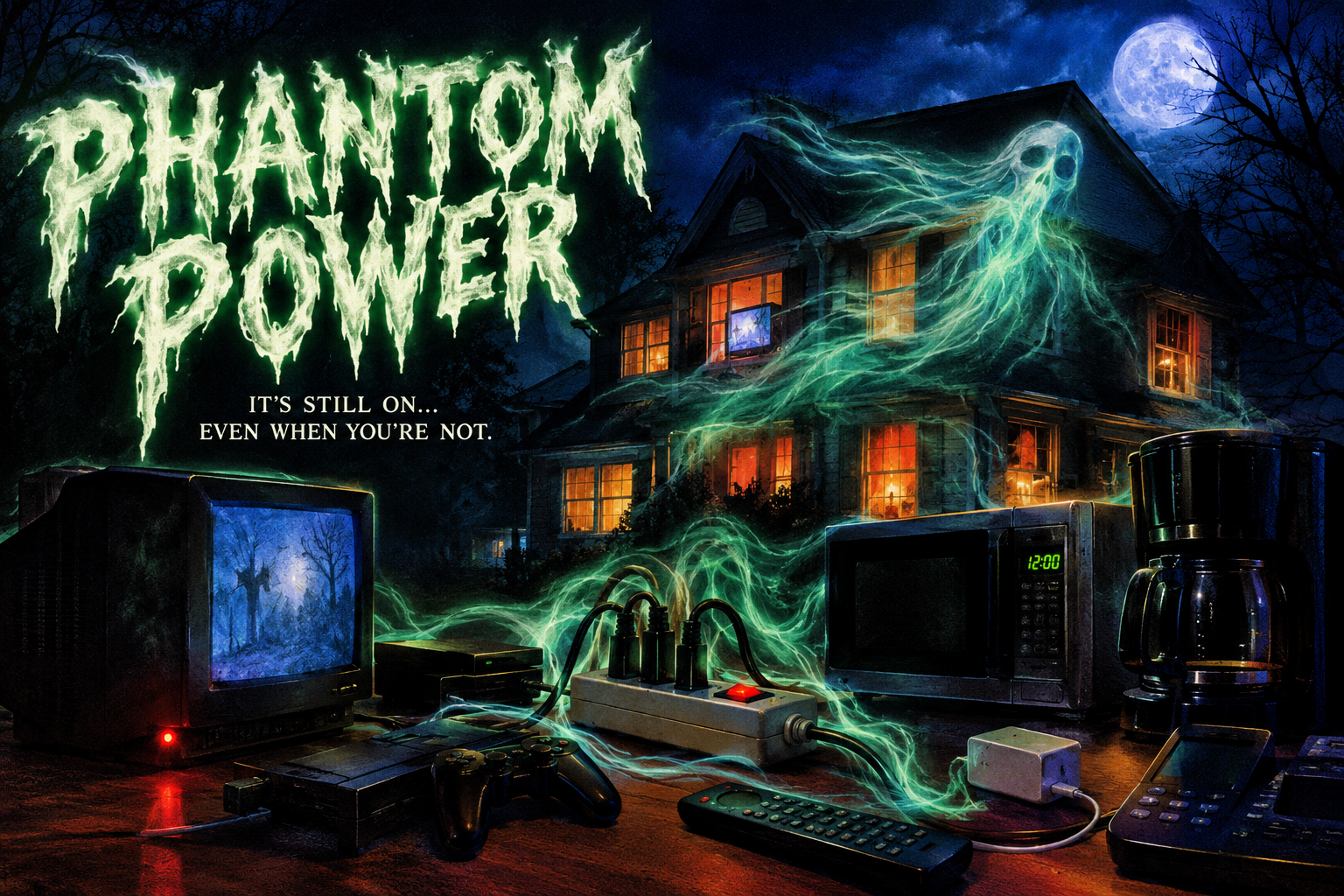
Your Long Island home is using electricity right now, even if every light is off and nobody’s there. The TV is waiting for a remote signal. The cable box is downloading updates. The microwave clock is glowing, the game console is in “instant-on” mode, and a dozen chargers are warm in the wall. This is phantom power, also called vampire power or standby load, and you pay for every watt of it, 24 hours a day, 365 days a year.
How Much Phantom Power Really Costs
Research from Lawrence Berkeley National Laboratory, part of the U.S. Department of Energy, puts standby power at 5 to 10 percent of the average home’s electricity use. The DOE estimates that’s more than $100 a year for a typical American household.
Long Island isn’t typical. We pay some of the highest electric rates in the country, so the same idle devices cost you more here than almost anywhere else. On a $250 monthly PSEG bill, 5 to 10 percent comes to $12 to $25 a month, or $150 to $300 a year, spent on devices doing nothing.
The Bigger Problem: You Don’t Control the Price
Phantom power is the leak. The real threat is the price of the water. PSEG Long Island’s Power Supply Charge, the part of your bill tied to fuel and market costs, jumped 13.23% in February 2026 and another 20.14% in September 2026, according to PSEG’s own published rate tables.
You didn’t vote on those increases and you can’t negotiate them. Every phantom watt, every air-conditioned summer afternoon, every pool pump cycle and EV charge gets billed at whatever rate the utility sets that month.
That’s why phantom power deserves your attention: it’s a small, constant reminder that you’re renting your electricity from someone else at a price they control.
Where Phantom Power Hides in Your Home
The worst offenders are usually entertainment centers: TVs, cable and satellite boxes, soundbars, and gaming consoles, especially consoles left in rest mode.
Home offices come next, with computers, monitors, printers, and routers that never fully sleep. Then come kitchen appliances with clocks and digital displays, smart speakers that are always listening, and chargers left plugged in with nothing attached.
One device on its own is a rounding error. Thirty or forty of them running all year is a line item.
How to Find and Cut Phantom Loads
Buy a plug-in electricity monitor (about $20 at any hardware store) and test your entertainment center and office equipment in both “on” and “off” modes.
Plug clusters of non-essential devices into a switched or smart power strip so one click shuts them all down. Turn off “instant-on” and “quick start” settings on TVs and consoles.
Leave refrigerators, medical equipment, security systems, and anything else that needs constant power alone.
These steps can trim your bill, but they won’t change what you pay per kilowatt-hour, and that’s the number that keeps going up.
Why Solar Is the Permanent Fix
Unplugging chargers shrinks the leak. Solar replaces the source.
A properly designed system on your roof produces electricity that powers your whole house, phantom loads included, and under Long Island’s net metering rules, the surplus you generate during the day earns credits against what you use at night.
Instead of paying PSEG’s next increase, you’re producing your own power at a cost locked in the day your system is installed. Every rate hike after that makes your system more valuable.
The honest caveat is that solar only pays off when it’s designed around your actual usage, your roof’s condition, orientation, and shading, and your financing terms. A generic quote from a call center can’t tell you that. A site evaluation can.
Why Homeowners Call Solar Pro Roofing
Solar is a roofing project before it’s an electrical one, and that’s where most installers cut corners.
Solar Pro Roofing is GAF Certified Plus for residential roofing, so your roof and your panels are designed, installed, and warrantied together, with no finger-pointing if something leaks.
I’ve worked in the solar industry for 11 years. We’re fully licensed and insured in Suffolk (HI-71407) and Nassau (204556), rated A+ by the BBB, and backed by hundreds of five-star Google reviews from Long Island homeowners.
We’ll pull your real usage history, inspect your roof, and show you the actual numbers, including whether solar makes sense for your home. If it doesn’t, we’ll tell you.
Frequently Asked Questions
Does phantom power really add up?
Yes. DOE-backed research puts it at 5 to 10 percent of home electricity use, and Long Island’s high rates make each wasted kilowatt-hour more expensive than the national average.
Will solar panels stop phantom power?
Solar doesn’t stop your devices from drawing standby power. It means you stop buying that power from the utility, because your system generates electricity for everything in your home, phantom loads included.
Is my roof a good fit for solar?
It depends on age, condition, orientation, and shading. That’s why Solar Pro Roofing inspects the roof first. If it needs work, we can handle the roof and the solar as one project.
Stop Paying for Power You’re Not Using
Every month you wait, you pay PSEG’s rate for every watt your home uses, wasted or not.
Call Solar Pro Roofing at 631-901-6144 or visit SolarProRoofing.net for a free roof and solar evaluation.
Solar should never be shady.